Friday, 6 May 2016

Removing Drywall Anchors from wall


There are a few reasons you might need to expel drywall Anchors from a wall. You've either introduced the Anchors in the wrong place or you're restoring your wall and don't need the grapple to be seen. Regardless, you'll have to know how to expel your wall Anchors. Here's the manner by which to do it. 

Step 1 – Remove Your Anchor
Some Anchors, such as strung Anchors, can undoubtedly be evacuated by pulling or unscrewing it from its opening in the wall. Utilize a screw driver to back the grapple out of the wall on the off chance that it has been screwed into the drywall. With some Anchors you can back it out of the wall. With others, this may not work.
Step 2 – Push Your Anchor into the Wall
There is some wall Anchors that you won't have the capacity to retreat from the wall. With these, just push them into the wall by hitting them with a sledge and a screwdriver until the Anchors is pushed over into the drywall or until pushed into the space behind the drywall.
Step 3 – Fill and Paint Your Anchor Hole
On the off chance that you don't plan to utilize your emptied grapple opening to introduce another Anchors, essentially fill it with putty or drywall compound and paint it.
For more details visit our website or Widespread Industrial Supplies, Inc. - http://www.widespreadind.com/
1220 S. Boyle Ave.,
Los Angeles, CA 90023
Telephone: +1 310-793-7315
FAX: +1 310-793-7317
Email: sales@widespreadind.com

Thursday, 5 May 2016

Hand Cutting and Drilling Tools


Most Common Mistakes
1. Setting a board to be cut between two backings. Rather, cantilever the board over the outside of one backing to abstain from restricting the saw edge when the board drops. This technique will maintain a strategic distance from "kick back."
2. Neglecting to pick the fitting saw edge for the material being cut Always utilize the best possible front line for the employment you are doing. That implies one, that is sharp and in addition made for a given material.
For sawing and amassing, a standout amongst the most valuable extras is a couple of saw stallions. They can mean the contrast between a simple, agreeable assignment and a troublesome one. Saw stallions support both finishes of your work while permitting space for the saw.
Hand Tools are as key as the force instruments.
Cross-cut Saw. This is utilized to cut over the grain of wood. It has littler, balance teeth. A 8-point saw is best for general use.
Tear Saw. A tear saw cuts with the grain, and has much bigger teeth.
Mix Saw. This cuts both crosswise over and with the grain.
Hacksaw. This apparatus is utilized on metal, plastic, and electrical channel.
Backsaw. This saw is utilized as a part of conjunction with a miter box to cut a consummately straight line over a bit of wood. The steel backing keeps it adjusted.
Keyhole Saw. This has a sharp edge that is smaller at the tip than at the heel or handle. It is utilized for cutting openings as a part of drywall or framing or for bended cuts.
Adapting Saw. An adapting saw is expected to take after an unpredictable, fragile, or many-sided cut in wood. The sharp edge is dainty, fine toothed, and removable.
Tips on Sawing
1. Do not store saws in tool stash or where the teeth will get harmed. Hang your saws if conceivable. If not purchase a plastic tooth watches or make one out of cardboard.
2. Keep saw cutting edges sharp. Keep them out of contact with metal or concrete and stone. Expel any nails from wood before sparing.
3. Protect your saw sharp edges by covering them with glue wax or a lighter evaluation of machine oil. Keep them in a cardboard sheath.
Etches are wood-cutting devices. It is best to buy an arrangement of etches running from 1/4" to 1/2" in widths for general use.
Attachment Chisels are intended to be utilized with a hammer. (I prescribe not Using a sledge to strike an etch.)
Tang Chisels are for working with the heaviness of the hand as it were. For more particular use, buy a decent sloped edge
Cabinetmaker's Chisel for completion work.
The square edge of a confining etch is best to form work, while the tight mortise etch serves to split waste away.
Tips on Chiseling
1. Start your edge delving into the wood, marginally inside your rule mark.
2. Do not cut too profoundly. Etches are intended to chip and shave away. The inclined edge goes into the work so that it always coordinates the etch out of the wood for better control.
3. Keep the front line coordinated far from your body and hands.
For more details visit our website or Widespread Industrial Supplies, Inc. - http://www.widespreadind.com/
1220 S. Boyle Ave.,
Los Angeles, CA 90023
Telephone: +1 310-793-7315
FAX: +1 310-793-7317
Email: sales@widespreadind.com

Monday, 2 May 2016

Widespread Industrial Supplies inc. Supplier of best quality fasteners


Made utilizing top quality raw material Widespread Industrial Supplies, Inc. is the main supplier of high respectability extraordinary fasteners 'taking care of customers' demanding requests for basic applications in unfriendly situations. We have faith in supplying dashing in fascinating materials is a work of art and it is something we have consummated at Widespread Industrial Supplies, Inc. Our fasteners are accessible at financially savvy costs and are profoundly famous in US market.
Widespread Industrial Supplies, Inc. Fasteners has a huge demand from commercial ventures like Oil Refineries, Automotive Repair and Maintenance, Machine Shops, Metro Maintenance Shops, Manufacturing Plants, MRO Facilities, County Correctional Facilities, City and County Maintenance Yards.


T Bolt - The wide range of T BOLT offered by us is accessible in various sizes with the goal that it fit in different applications. These are generally appreciated for their strength, sturdy construction, erosion safe components, and application particular plans. T BOLT is utilized as a part of numerous sorts of machines, as these are accessible in various completions to meet the shifted modern prerequisites.

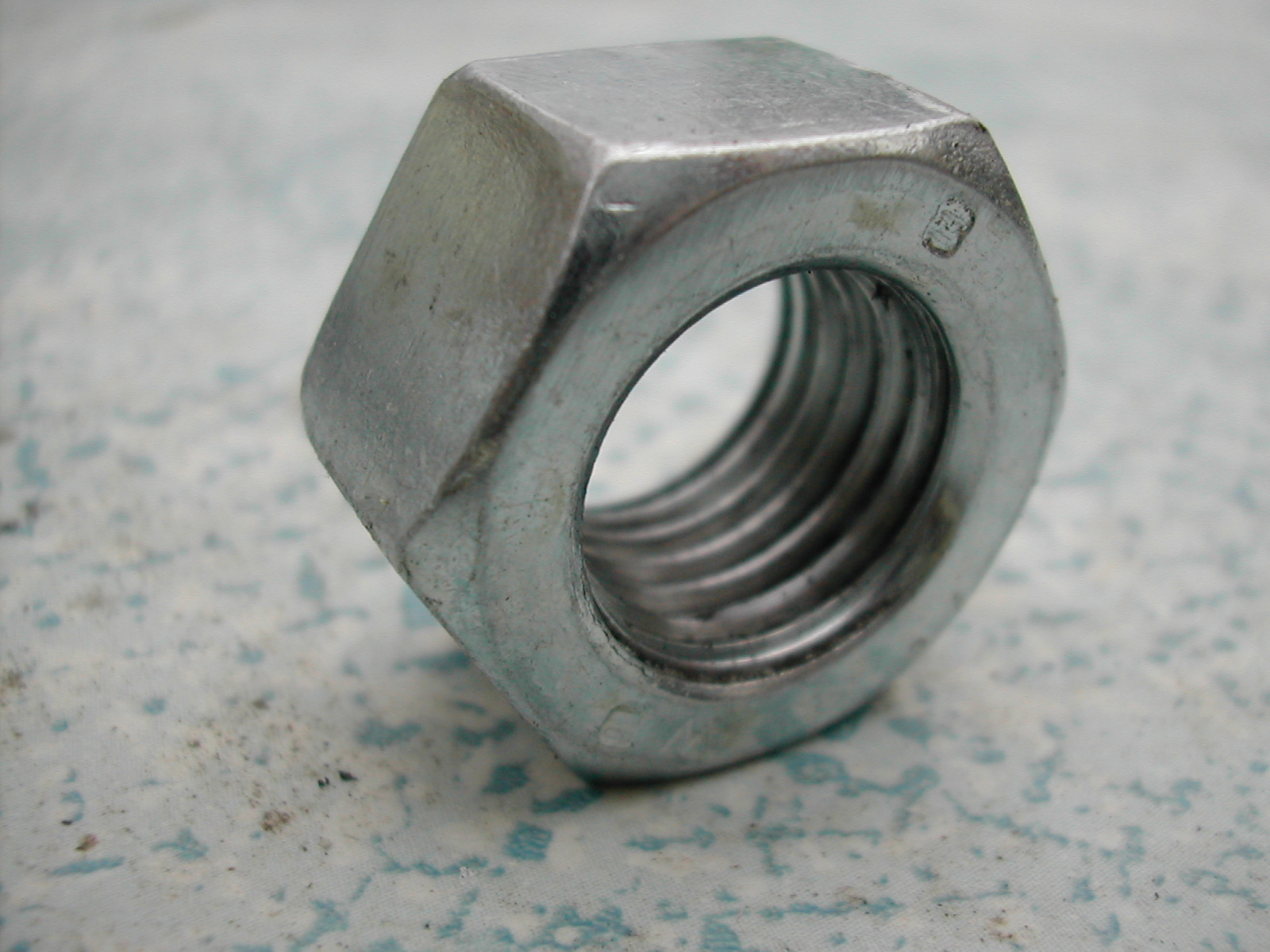
We offer a subjective scope of Hex Nuts available in different technical specifications. These can be effortlessly customized by particulars gave by our customers. These are the most well-known type of NUTS, which are planned to be utilized on outer or male screw threads, for example, a fastener, with the end goal of fixing two or more segments.

We offer comprehensive range of STUDS BOLTS, which is utilized widely as a part of different electrical, synthetic and building segments. These are accessible in various shapes and sizes and are figured for their different elements, for example, corrosion resistance, dimensional precision and more administration life. Our scope of item is exceptionally requested the whole way across US due to its prevalent quality and practical costs. 

We offer a thorough scope of STUDS BOLTS, which is utilized broadly as a part of different electrical, substance and building segments. These are accessible in various shapes and sizes and are figured for their various features, for example, erosion resistance, dimensional precision and longer service life. Our scope of item is much requested the whole way across the globe in view of its superior quality and financially savvy costs.

For further details, please call on +1 310-793-7315 or email at sales@widespreadind.com or visit our website: http://www.widespreadind.com/

UNDERSTANDING FASTENERS


Fastener- A mechanical device that holds or joins two or more components in definite positions with respect to each other and is often described as a bolt, nut, rivet, screw, washer, or special formed part.

Tensile strength- The maximum tensile-applied load a fastener can hold prior to facture (vertical stress)

Shear strength- The maximum load applied to a fastener’s axis that can be withstood prior to failure (horizontal stress)

Proof Load- The tension applied load that a fastener must withstand without any indication of permanent deformation or failure. Proof load is typically calculated at 90-93% of the minimum yield strength.

FASTENER IDENTIFICATION

Color:
Grade 8 bolts tend to be yellow in color, which is zinc yellow dichromate plating.  Grade 5 bolts tend to be silver in color, which is clear zinc plating.  Stainless steel bolts have a dull grey finish.

Head Markings:

Imperial (Fractional) bolts are identified by the number of the lines on the head + 2.  A grade 5 bolt will have three lines on the head.  A grade 8 bolt will have six lines on the head.

Metric bolts will be designated by decimalled numbers. (8.8, 10.9, 12.9)

Country of Origin:
 Designated by manufacturer symbol on bolt head


THREAD PITCH

FRACTIONAL- THREADS PER INCH (TPI)
USS/UNC- COARSE THREAD
SAE/UNF- FINE THREAD
EX.  ¼-20 HAS 20TPI (USS / UNC)
        ¼-28 HAS 28TPI (SAE / UNF)
METRIC- MEASURED GAP BETWEEN EACH THREAD IN MM
EX. M10 X 1.5 HAS 1.5MM BETWEEN EACH THREAD


For further details, please call on +1 310-793-7315 or email at sales@widespreadind.com or visit our website: http://www.widespreadind.com/